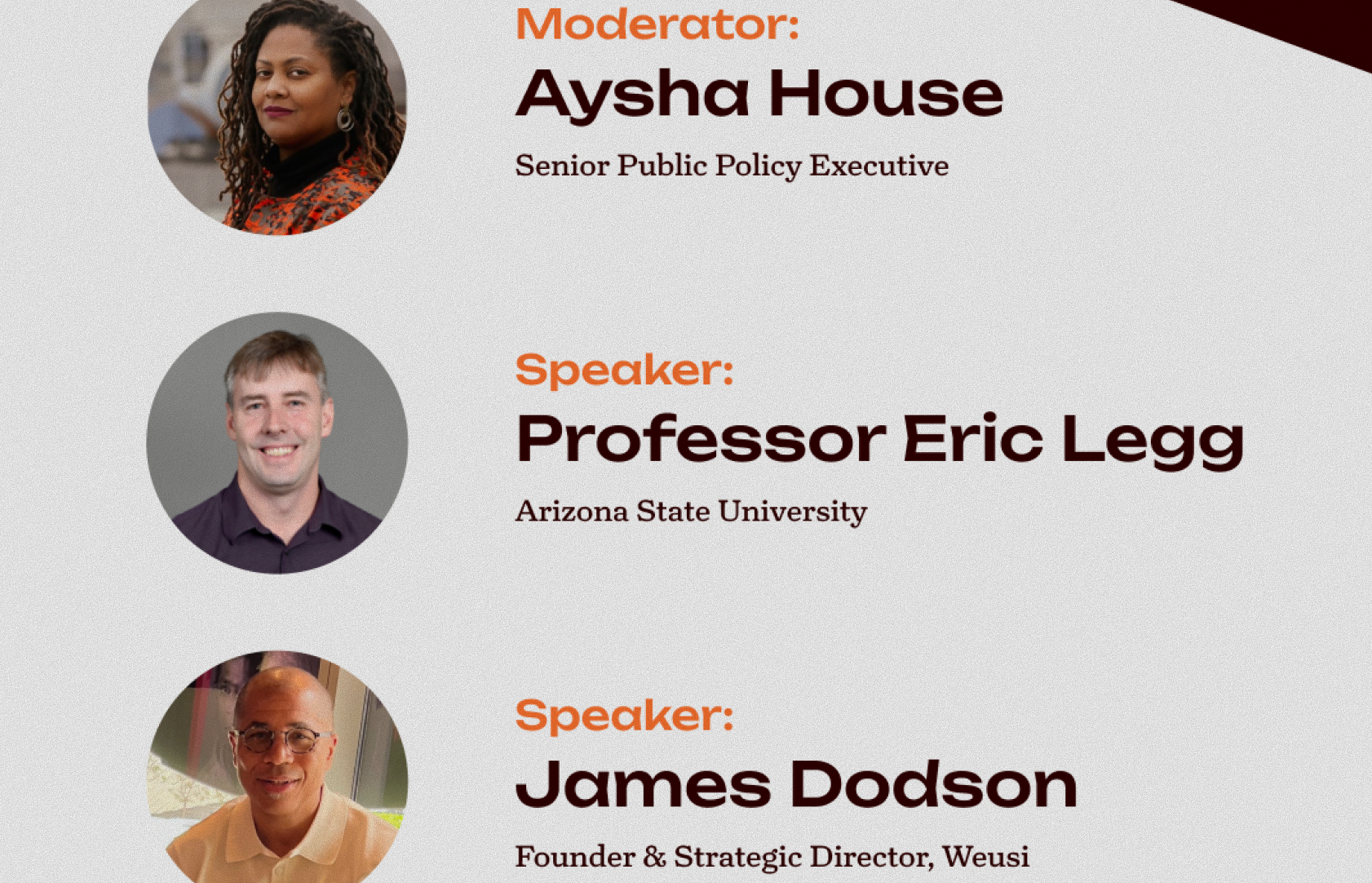
On World Squash Day, Weusi and Arizona State University came together to share the findings of a collaborative research study examining a question that has long deserved greater attention:
What happens when people gain access to squash but still struggle to feel that they belong?
The research was born out of a desire to better understand the experiences of players from underrepresented communities, particularly Black players, and the cultural and structural barriers they encounter on their journey through the sport.
Its origins can be traced to 2020, a period of global reflection on race, identity, and opportunity. For Weusi founder James Dodson, whose relationship with squash spans more than four decades, this was an opportunity to listen more closely to the individuals and communities whose experiences had not always been reflected in the wider narrative of the game.
Working with Dr. Eric Legg of Arizona State University, James conducted interviews with people whose journeys into squash followed different paths, including alumni of squash and education programs, college players, and individuals who discovered the sport through communities around the world.
The intention was not to document barriers, but to understand the relationships, environments, and experiences that influence participation, and to explore how the sport might become a place where more people can thrive.
On World Squash Day, those findings became the starting point for an open conversation involving researchers, players, parents, coaches, and community leaders.
Moderated by Ayesha House, mother of the Moshi sisters, the discussion moved beyond the research itself to examine the lived experiences behind its findings and the opportunities they present for the future of squash.
With the sport preparing for its Olympic debut at Los Angeles 2028, the timing could hardly be more significant.
What emerged was a conversation about more than access. It was about identity, community, opportunity, and the power people have to shape the spaces in which they participate.
Access opens the door. Belonging makes the difference.
One of the central findings of the research was the distinction between gaining access to squash and developing a genuine sense of belonging within it.
The study identified two recurring types of barriers.
The first were structural: the availability of courts, the cost of equipment and coaching, and the financial demands of traveling and competing.
The second were cultural: the traditions, expectations, and social codes that can influence who feels comfortable and accepted within the sport.
A player might have access to an excellent facility but still feel like an outsider. They might have earned the right to compete yet feel pressure to change how they behave to fit into an unfamiliar environment.
During the presentation, Dr. Legg shared a revealing observation from one of the research participants:
"I remember feeling like I was too loud or too joyful. I felt limited by that."
It is a simple statement that speaks to something much larger. When the natural expression of joy becomes something a player feels compelled to suppress, we must ask what kind of sporting environment we are creating.
Squash has a proud history and traditions that many value deeply. But preserving what makes a sport special should not mean asking newcomers to leave their cultural identities at the door.
True inclusion is not about inviting people into an existing space, but about allowing their presence to enrich and evolve that space.
The communities within the community
One of the study's most encouraging findings was the importance of what Dr. Legg described as micro-communities.
These are the smaller circles of belonging that exist within the wider squash world: a neighborhood program, a school team, a group of friends, a supportive coach, or a network of families whose lives have become connected through the game.
While a player might not immediately feel part of the broader squash establishment, they may experience a profound sense of belonging within these smaller communities. And that matters a whole lot.
Because belonging creates confidence. Confidence encourages participation. Participation creates relationships. And those relationships can open doors to experiences, resources, and opportunities far beyond the court.
The research also explored the importance of social capital, the value of the relationships and networks people develop through their sporting lives. Consider the role of organizations such as MetroSquash, SquashSmarts, StreetSquash, and Access Youth Academy. Their contribution extends beyond teaching a young person how to hit a ball.
They create environments in which friendships grow, mentors emerge, identities develop, and possibilities expand.
During the conversation, James reflected on interviews with squash and education alumni who spoke warmly about the camaraderie of their teams. Their most meaningful memories were often rooted not in prestigious clubs or individual achievements, but in the people alongside whom they had learned and competed.
He also recalled conversations with players from Jamaica, whose experiences reflected another form of community-building: neighborhood teams, locally established playing cultures, and the freedom to develop a relationship with squash on their own terms.
These experiences remind us that there is no single way to belong in squash, and perhaps there never should be.
Belonging begins before the first ball is hit
For Raheem Logan, a StreetSquash Harlem alumnus now working with Access Youth Academy in San Diego, the question is not how to introduce someone to squash.
It is what makes them want to return.
Speaking from his experience as both a player and an educator, Raheem described the importance of the seemingly ordinary moments surrounding the game.
How are you greeted at reception? Do you feel comfortable in the locker room? Are the people around you welcoming? Does the atmosphere reflect anything familiar about your life and culture?
These details may appear small, but their influence can be profound.
A warm greeting can establish trust. A dismissive attitude can undo it. The music playing in a facility, the opportunity to bring family members into the space, or a community event that celebrates different cultural experiences can all communicate something important about who is welcome.
Raheem also raised another essential point: people need opportunities to improve.
Squash is technically demanding. Enjoyment and encouragement matter, but so does the satisfaction of developing skills, recognizing progress, and discovering what you are capable of achieving.
Dr. Legg reinforced the importance of skill mastery in sustaining participation, particularly among young people. This places coaches and community programs at the center of the conversation. Their role is not only to teach the game but to help people navigate its environments, build their abilities, and feel that their continued participation is valued.
Access might introduce someone to squash. But encouragement, progress, and human connection give them a reason to stay.
When the whole family enters the game
Belonging is not exclusively a player's experience.
Ayesha House, who moderated the discussion and is the mother of the Moshi sisters, offered a deeply personal perspective on what it means to navigate squash as a Black parent.
She recalled attending tournaments and being mistaken for a member of club staff rather than the mother of competing athletes. At one point, she had shirts made identifying herself as a "Squash Mom" in an attempt to avoid those assumptions.
She also described the social expectations surrounding how parents express themselves, support their children, and interact with other families.
Her contribution broadened the conversation in an important way.
When a child enters a sport, their family often enters an unfamiliar culture alongside them. Parents provide transportation, emotional support, encouragement, resources, and countless hours of commitment. Yet they, too, may encounter environments in which they feel scrutinized or out of place.
A sporting community cannot fully support its young people without considering the experience of the families standing behind them. And as Ayesha's reflections demonstrate, even sporting success does not automatically eliminate prejudice or guarantee acceptance.
Excellence should not require the loss of identity
Perhaps one of the most thought-provoking exchanges came when the discussion turned to the relationship between athletic excellence and cultural conformity.
Sakhi Khan, who grew up around the Harvard Club in Boston through his father's work as a squash professional, spoke about the importance of determination, skill development, and learning to navigate elite sporting environments.
His experience reflected a reality familiar to many generations of players: understanding the expectations of established institutions can be an important part of gaining opportunities within them.
But a younger voice offered a different perspective.
Madison Craig-Williams, a recent SquashSmarts alumna, challenged the idea that people should have to change their personalities or identities to gain acceptance.
"You shouldn't have to change channels in order to feel that you can belong into a space."
It was one of the defining moments of the conversation. Two perspectives, influenced by different experiences and generations, revealed a central tension within the sport.
Learning the culture of a game can be valuable. Developing discipline, respect, and competitive excellence is essential. But should achieving those things require individuals to suppress the very qualities that make them who they are?
At Weusi, we believe there is room for excellence and authenticity to grow together. The ambition should not be to lower standards. It should be to create environments where more people have the resources, encouragement, and freedom to reach them.
Because the next generation should not only inherit the opportunities created by those who came before.
They should be empowered to redefine what those opportunities look like for everyone who follows.
LA28: A bigger stage, a bigger responsibility
Squash's arrival at the 2028 Olympic Games represents an extraordinary milestone.
For a sport with such a rich international history, the Olympic stage promises greater visibility, new audiences, increased commercial interest, and the potential to inspire another generation of players.
Yet the discussion raised an important distinction between the growth of a sport and the accessibility of that growth. Ayesha questioned the affordability of experiencing Olympic squash in person, recalling an opportunity to purchase particularly expensive tickets.
If squash is preparing to reach a larger global audience, who will be able to afford a place in that audience? And beyond watching the world's best players, who will have the opportunity to pick up a racket themselves?
The conversation also explored the significance of public courts, affordable coaching, youth development, and greater investment in community-based programs.
For Dr. Legg, this speaks to a broader issue in the way society values sport.
When participation is viewed primarily through commercial returns or elite performance, its wider developmental benefits can become secondary.
But sport is also a vehicle for education, personal growth, health, relationships, and stronger communities.
Ayesha added another dimension: sport as a form of international connection and diplomacy. The Olympics allows us to celebrate athletes from cultures and countries beyond our own, creating shared experiences that transcend geography.
For Weusi, this global dimension is central to our relationship with squash. The game has the capacity to connect a young player in Chicago with a coach in Jamaica, a family in California, or an athlete competing on the other side of the world.
Those connections are part of its extraordinary cultural value. But Olympic recognition alone will not make squash more inclusive. That opportunity depends on what the sport chooses to do with the attention, investment, and momentum that the Games generate.
LA28 should not simply be a moment when more people see squash. It should be a catalyst for more people to see themselves in it.
From listening to lasting change
As the conversation drew toward its conclusion, a critical question emerged.
How much more research is necessary, and how do we ensure that the experiences people share actually lead to change?
Dr. Legg acknowledged that many of the research findings would not surprise those who have lived through them.
That, in many ways, is precisely why the work matters.
Personal experiences that have long existed within communities can become easier for institutions to recognize and address when they are documented, examined, and presented as research.
The study gives greater visibility to voices that deserve to be heard by the people shaping policy, funding programs, and determining the future direction of the sport. But research should not be the end of the conversation.
Participants discussed the value of regular surveys, program exit interviews, feedback from parents and players, and more transparent ways of understanding and responding to experiences at tournaments.
Madison reinforced the importance of actually using the information communities provide, rather than simply collecting it. And James spoke about the possibility of continued engagement and research to track the experiences of squash communities as the sport evolves.
The message was clear:
meaningful progress requires an ongoing relationship between the people who participate in squash and those who help govern and develop it.
The future belongs to those who shape it
There is an especially hopeful insight at the heart of the Weusi and Arizona State University research.
The smaller communities that help people navigate the challenges of squash can also become powerful agents of change within the wider sport.
The young person who enters through a community program may become a coach. The former player may become a mentor, parent, organizer, or advocate. The community that once had to seek acceptance may grow into one that establishes new traditions, opens new facilities, and creates new opportunities.
Dr. Legg described this as a process through which people move beyond navigating existing structures to actively challenging and changing them.
It is a powerful reminder that belonging is something people create together. And it is already happening.
Across squash, individuals and organizations are contributing their experiences, cultures, perspectives, and energy to a sport that continues to evolve.
There is still much work to be done. Structural barriers remain. Affordability continues to shape opportunity. Cultural expectations deserve greater reflection. And the experiences of players and families must remain central to the decisions that affect them.
But there is also reason for optimism.
Because the future of squash does not rest solely in the hands of its established institutions.
It lives in the communities nurturing new talent, the coaches creating welcoming environments, the parents championing their children, and the players bringing their full identities and ambitions onto the court.
At Weusi, we see sport as a way to connect cultures, generations, and possibilities. Through movement, people discover not only what they can achieve, but what they can contribute to the world around them.
The Weusi and Arizona State University research offers a deeper exploration of how individuals enter squash, build communities, experience barriers, and develop a sense of belonging.
Through firsthand accounts and academic analysis, it provides valuable perspectives for players, parents, coaches, program leaders, sporting institutions, and everyone who believes in the power of sport to enrich lives.
We've shared some of the ideas that emerged during our World Squash Day discussion. The full research invites you to explore the evidence, experiences, and insights behind them.
Discover the research and consider what it could mean for the future of the game.