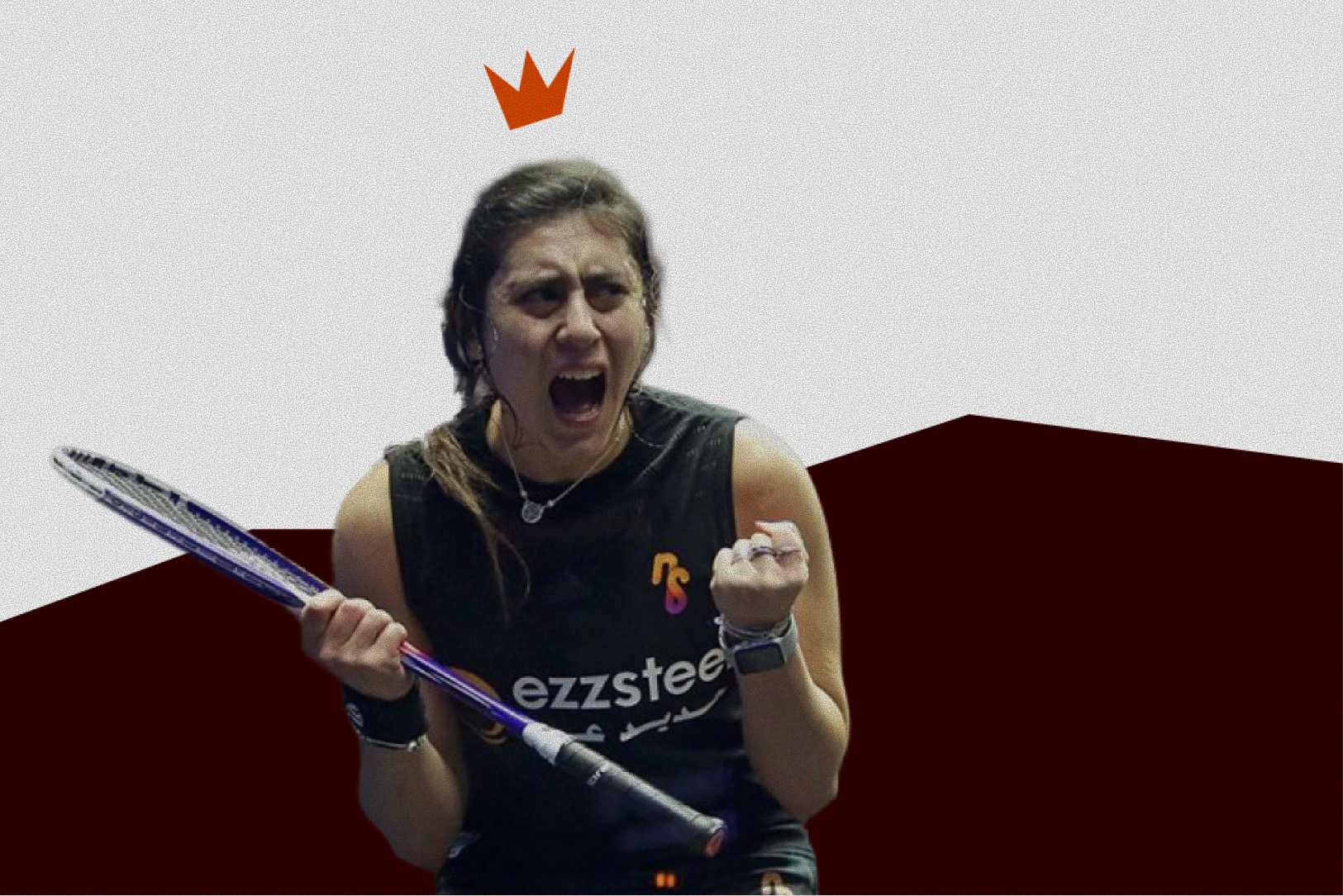
Nour El Sherbini’s journey from learning squash by watching her older brother to becoming an eight-time World Champion is one of the game’s remarkable stories. Her career also shows what becomes possible when the next generation has excellence to watch.
Nour El Sherbini began playing squash at six in Alexandria, Egypt. She was introduced to the game partly through her older brother, Omar, whom she watched play before taking up a racket herself, and er progress was extraordinary.
At just 13, El Sherbini won the 2009 Women’s World Junior Championship, an Under-19 competition, becoming the youngest player to win the title. By 16, she had entered the world’s top 10, and in 2012 she became the youngest woman to reach the British Open final.
Then came another breakthrough. In 2016, at 20 years old, El Sherbini became the first Egyptian woman to win the individual World Championship and rose to World No. 1.
Those achievements established her among squash’s elite. What followed transformed an exceptional beginning into an enduring career.
Nour El Sherbini arrived at the top of squash remarkably young. What makes her story even more significant is how long she has remained there.
Greatness, Sustained
In May 2025, El Sherbini won her eighth individual World Championship in Chicago, defeating fellow Egyptian Hania El Hammamy in the final. The victory put her alongside Malaysia’s Nicol David with eight women’s World Championship titles. It was also El Sherbini’s tenth consecutive appearance in a World Championship final.
That consistency is an important part of her story. Sporting careers change as new opponents emerge, expectations increase, and the physical and mental demands of competing accumulate. Remaining among the best requires an athlete to keep adapting while the competition around them does the same.
El Sherbini’s 2025 championship demonstrated that resilience particularly well. In her semifinal against Olivia Weaver, she trailed two games to one and was 8-3 down in the fourth. El Sherbini responded by winning eight consecutive points, taking the game 11-8 before winning the fifth and reaching another World Championship final.
The prodigy who announced herself in squash at 13 had become one of its most enduring champions.
Greatness can announce itself in a moment. Sustaining it across generations of competition is something else entirely.
Her longevity also places El Sherbini in an unusual position within the sport. Younger professional players entering the game today have grown up during an era in which she has been a constant presence near the summit of women’s squash. She has gone from being the young player chasing established champions to becoming the established champion younger players must find a way to beat.
That is the natural cycle of sport, but few athletes remain at the center of it for as long as El Sherbini has.
When the Next Generation Can See What Is Possible
For Weusi, another important dimension of El Sherbini’s journey matters. Her introduction to squash came through proximity to the game. She could watch her brother play, learn from what she saw, and eventually begin playing herself.
Today, El Sherbini occupies the other side of that relationship. She is now one of the players younger athletes can watch. That matters because every sport needs visible examples of where participation can lead. A young player does not need to believe they will become an eight-time World Champion, but seeing athletes excel can broaden their understanding of the opportunities within a game.
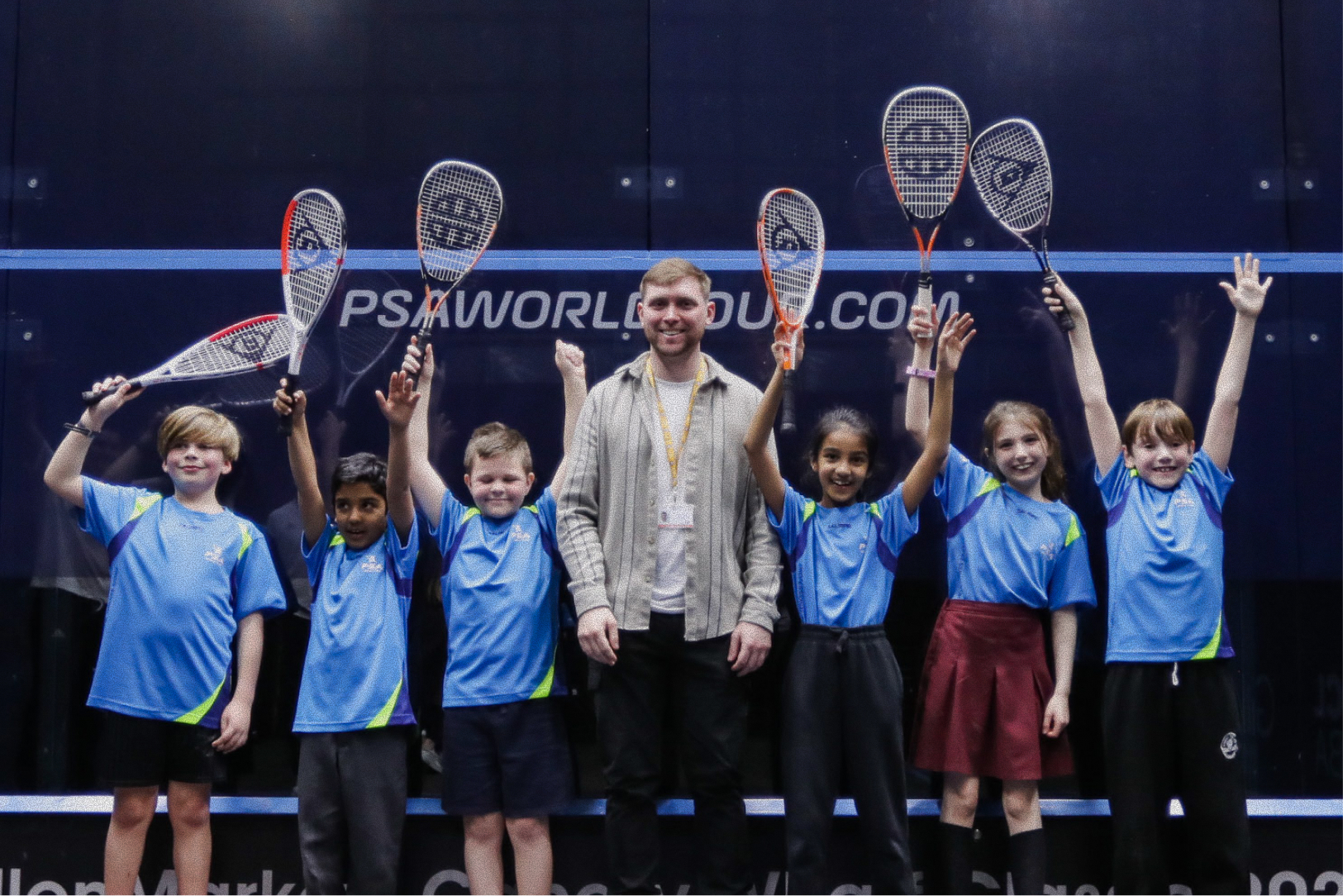
Before young people can imagine how far a sport might take them, they first need the opportunity to see the game, experience it, and recognize that there may be a place for them within it.
This idea sits at the heart of how Weusi thinks about a sporting life.
Sport is more than the professional game because it creates movement, relationships, travel, education, competition, community, and opportunities to experience the world differently. The champions we watch represent only one end of a much larger ecosystem, but their visibility can draw attention to everything beneath it.
That becomes particularly interesting for squash as the sport approaches a significant moment in its history. Squash will make its Olympic debut at the Los Angeles 2028 Games, introducing the professional game to audiences who may have had little previous exposure to it.
For the sport, that creates an opportunity that extends beyond the Olympic podium. New audiences will see squash, and some young people will encounter it for the first time. The challenge will be turning that visibility into genuine opportunities to participate.
The future of squash will not be determined only by the champions standing at the top. It will also depend on how many people are given the opportunity to begin.
More Than the Record
Records give us one way of understanding Nour El Sherbini. Eight individual World Championships. Ten consecutive World Championship finals by 2025. World No. 1. A professional career that began with extraordinary promise and developed into sustained excellence.
Those achievements are measurable, but her influence is harder to quantify.
We cannot know how many young players have picked up a racket because they watched El Sherbini, and we should not pretend that we can. What we do know is that an entire generation of squash players has been able to watch her compete at the highest level. And hat visibility has value.
It allows young athletes to study what excellence looks like. They can see the movement, discipline, decision-making, resilience, and competitive demands required at the highest level of the sport. They can also see that even the game’s greatest players encounter difficult matches, changing rivals, defeats, and moments when the outcome is uncertain.
El Sherbini’s comeback against Weaver in Chicago is a powerful example. An eight-time World Champion does not become immune to adversity. Excellence is demonstrated partly through how an athlete responds when adversity arrives.
The Example Remains
There is something fitting about the arc of Nour El Sherbini’s story. Her own squash journey began, in part, by watching someone else play. She picked up a racket at six, became World Junior Champion at 13, reached World No. 1 at 20, and continued building a career that has placed her among the most accomplished women in the sport's history.
Now, she is the person others can watch.
One generation discovers what is possible by watching another. Eventually, some of those watching become the example themselves.
And in 2026, squash gave us an extraordinary illustration of that cycle.
El Sherbini returned to the World Championships in Giza seeking a ninth title. She reached the final for the 11th consecutive time and the 12th time overall. Across the court stood another Egyptian, 18-year-old Amina Orfi, a four-time World Junior Champion who had grown up looking up to El Sherbini.
Their final lasted 106 minutes and went the full five games. Orfi eventually prevailed 6-11, 11-6, 11-9, 7-11, 14-12 to become the youngest women’s World Champion in history at 18 years and 10 months. She surpassed Nour El Sherbini's record.
There is something beautifully cyclical about that moment. El Sherbini had once been the young player who arrived earlier than anyone expected and redefined what youth could accomplish at the highest level of squash. A decade later, she stood across the court as another young Egyptian player made history of her own.
Orfi’s victory does not diminish El Sherbini’s legacy, but offers another way to understand it.
The young player watches the champion, learns from the champion, competes against the champion and, eventually, may find a way to beat the champion. That is not the end of a legacy, but one way a legacy continues.
Making Sure There Is Someone Coming Next
This is where Nour El Sherbini’s story speaks particularly clearly to what we believe at Weusi.
Great sporting cultures need champions, but they also need continuity. They need young people who can see excellence, communities that give them access to the game, people willing to share knowledge, and pathways that allow curiosity to develop into participation.
Seeing someone succeed can spark something. What happens after that matters just as much.
As squash moves toward its Olympic debut at Los Angeles 2028, the game will have an extraordinary opportunity to introduce itself to more people around the world. The responsibility is to ensure greater visibility is matched by greater opportunity to participate, particularly in communities that have historically had less access to the sport.
That is part of the work Weusi exists to do.
We want more young people to experience what a sporting life can offer. We want them to encounter the game, see people excelling within it, find communities that welcome them, and have opportunities to discover how far their own ability and curiosity might take them.
Because the objective is not to find another Nour El Sherbini.
It is to make sure more young people have the opportunity to become their full selves.
Nour’s journey began with a six-year-old watching someone else play. She became the young player breaking records, then the champion everyone else had to chase. Eventually, another young player who had watched her reached the same stage and created her own history.
The trophies tell us what Nour El Sherbini achieved. The people who see what she made possible may tell us something even greater about what she leaves behind.