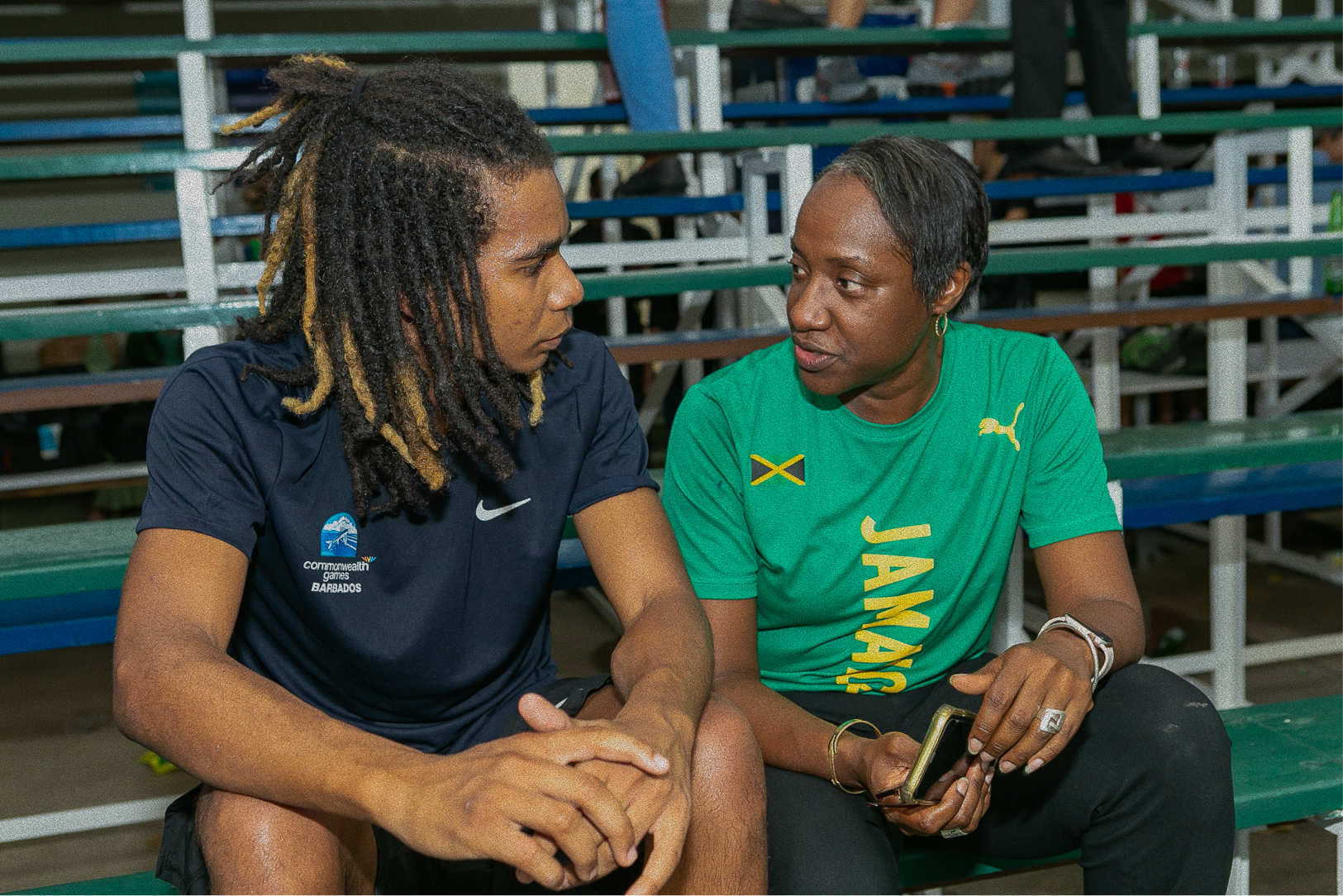
I never imagined squash would shape my life the way it did. My parents were always athletic, my dad played hockey and cricket, my mom played hockey too. They eventually started playing squash for fun, and I would just hang around the courts. One day, I picked up a racquet and started hitting the ball. I was always athletic, so it was just one more sport for me to try.
I hadn’t even been playing for three months when Jamaica hosted the Junior Caribbean Championships. They needed an under-12 girl, and even though I barely knew what I was doing, they put me in. I came third. What I remember most wasn’t the result, but the feeling. Losing hurt. And I didn’t want that feeling again. I told myself, I’m going to take this sport seriously.
I’m going to take this sport seriously.
A few years later, at 16, I was playing in my first Senior Caribbean Championships, number two on the Jamaican team. The tie came down to me, the deciding match, and I was down 2–0 against the number two in the Caribbean. I came off court and said to my coach, “I know I can beat this lady. What’s going on?” He told me to calm down. I went back out, dug deep, and won 3–2. That victory clinched the women’s title and the overall title for Jamaica. Everything said I shouldn’t win that match. But I did anyway. That was the day I truly learned what perseverance means.
People sometimes ask me if being a Black woman in squash ever made me feel unwelcome. The truth is, no. I’ve been in plenty of spaces where I was the only Black person, the only woman of color, but I always felt welcomed. Maybe it’s because of how we grow up in the West Indies.
Here, you walk into a bank, the teller is Black. You see women in leadership everywhere. We see class more than color. Still, representation matters. It matters for the young kid who wants to see someone like them in the referee chair, or across the court, or at the head of the table. And right now, there aren’t many of us. Sometimes I think I might be the only Black woman referee on the international scene. But I never let that define me. I know who I am, and I value who I am. Being Black isn’t a limitation, but a part of my excellence.
Representation matters. It matters for the young kid who wants to see someone like them in the referee chair, or across the court, or at the head of the table.
As I got older, squash opened doors that went beyond the court. I became a coach, an administrator, and eventually president of Jamaica Squash. Leadership brought its own challenges. The hardest part for me was being micromanaged. Sitting in meetings to prepare for more meetings, not being able to just get the work done. Coming from individual sports, my instinct has always been: if something isn’t working, I’ll step in and fix it myself.
But in leadership, I’ve had to learn that sometimes you have to let people fail. Even though I still struggle with that, I know it’s necessary. What I’ve tried to do is lead with the athlete at the center, because without athletes, there is no sport. I make sure no one can say, “We didn’t hear from them.” I’ll call. I’ll WhatsApp. I’ll follow up. The onus is on the athlete to decide, but no one should ever feel they weren’t given the opportunity.
After retiring from squash, I still craved competition. That’s when I discovered rifle shooting. A friend introduced me, and I realized I had a knack for it. A good teacher gave me solid fundamentals, and I achieved success early. Angles and equations don’t come naturally to me, so I had to find my own way to process them. I still don’t always do it the way it ought to be done, but I do it the way my brain works. And it works for me. Today, I’m the top female rifle shooter in the Caribbean.
If I could go back and talk to my 15-year-old self, I’d tell her two things: pay more attention in school, and play professional squash longer. Back then, we didn’t have the opportunities that kids have now. The professional tour wasn’t taken seriously, scholarships weren’t as accessible, exposure wasn’t the same. Opportunity was the thing we really lacked. I don’t live with regret, but I do want the next generation to have more.
If I could go back and talk to my 15-year-old self, I’d tell her two things: pay more attention in school, and play professional squash longer.
That’s why I believe squash needs a wider base. More kids. More love for the game. More athletes who are truly committed. Too many play because they like it, but they don’t feel the need to push further. The passion isn’t the same. And we need to travel, to compete overseas, to test ourselves. That’s how you grow. When I was younger, we competed abroad and learned the rhythms of the game. The new generation needs to more of that, so that squash has more visibility and diversity. A kid should be able to look at the game and know they belong; whether as a player, a referee, or a leader.
Now we’re heading into LA 2028, where squash will finally make its Olympic debut. Whether it stays or not is another story. I hope it does, because the sport deserves it. On my end, I’m working to get referees from our region to that level. We’ve already had one reach the top tier, and we’re pushing for more. I might even be there myself, as a referee, or through my role as a director of the Jamaica Olympic Association. But I’ll be honest: I’m still waffling. Do you go just to be there, or do you go to break barriers? That’s a question I’ll have to answer for myself.
When I think about legacy, I don’t think about titles or positions. My cousin once asked me why I keep taking on roles, and I said, “Because nobody else was doing it.” The truth is, I step into spaces where I feel I can make a difference. That’s what drives me. I want young women to look up and say, I too can do that. I mentored a woman who was doubting whether she should run for a position. I told her what I tell myself: Why not you? You have the skills. You have the voice. Why can’t it be you?
and The truth is, I step into spaces where I feel I can make a difference. That’s what drives me. I want young women to look up and say, I too can do that.
That’s my legacy. Not medals or accolades, but belief. Belief that you can step up, that you can belong, that you can lead. Squash gave me purpose, a way to travel the world, a chance to mentor others, a chance to grow. It showed me resilience and taught me leadership. And if you take anything from my story, let it be this: you are capable, you are worthy, you belong.
..........
For more than two decades, Karen Anderson has been one of the defining figures of Caribbean squash. A consistent presence and medal contender at the Pan American Games, she has represented Jamaica with distinction as an athlete, referee, administrator, and leader. As the region prepares for another edition of the Pan Am Games in the coming weeks, we hope Karen once again graces the event with her presence, continuing a legacy built on resilience, service, and belief.