My earliest memory of squash is of me standing on a cold court in Harare, surrounded by the smell of wood and the rubber of a ball that did not yet belong to me. The echo of footsteps followed me everywhere. I did not understand the rules, but I understood the feeling. I felt safe. My father was nearby, laughing with his friends, and that presence was my first introduction to the game. Nothing about it was competitive or pressured. It was comfort and belonging before I even knew what those words meant.
I did not know the rules. I just knew I felt safe.
Growing up in Zimbabwe and sometimes competing in South Africa meant entering spaces where squash was overwhelmingly white. You could count the Black players on one hand. Yet even with apartheid in the air and its consequences in the room, something interesting happened. I never felt completely pushed out. The court often became neutral ground. Race did not dictate how people treated me in those minutes of play. My experience was not perfect, but it was human.
And part of that humanity came from the people who chose to support me. I want this part said clearly. I give credit to all the non-Black people who helped me grow in the sport during those years. They offered guidance, encouragement, and community at a time when the world outside the court was fractured. That support carried me further than I understood back then.
I give credit to all the non-Black people who helped me grow in the sport.
Moving to the United States as a teenager widened everything. The roads were wider, the cars were larger. The weather was colder than anything I had known, and the expectations also grew. I arrived here because a long chain of people believed in me. Donors, admissions officers, coaches, immigration officials. People who never met me shaped the opportunity I now carried. That brought a sense of responsibility that still follows me.
I was not the most talented player. Not even close. But I came from a culture that insisted on respect and consistency. Greet people properly, treat everyone well. Show up fully, and keep going. That standard carried me through every new environment, especially the moments where I felt culturally out of place but internally grounded.
Talent was not my strength. Showing up was.
At Trinity, my real value became the intangible things that hold a team together. I encouraged teammates. I helped create joy. I wanted us to enjoy being around each other as much as we enjoyed the sport. And I was fortunate to have people I could look up to. There weren't many players of color in college squash, maybe two or three I could name back then. But seeing even one made a difference.
Lafika Rogante from Botswana made me believe I belonged. His dreadlocks, his confidence, his presence on the court were everything to me at that age. Then there was Gavin Cumberbatch from Barbados, the captain of the Yale team, another strong example of what representation could look like. And my coach, Paul Assaiante, an Italian American from the Bronx, pushed me to live every day with intention and speed. He taught me to embrace every opportunity with intensity.
Their influence shaped my confidence, my leadership, and my belief that the game is bigger than one player.
People sometimes assume I miss the trophies or the undefeated seasons. But trophies gather dust. What I miss is the middle. The long rallies that demanded everything from me. The pressure that sharpened me. The quiet satisfaction of knowing I refused to cut corners.
“I miss the middle, the battles, the becoming.”
Those moments shaped the way I now coach and lead. They taught me that growth is always more meaningful than glory. And every young person I work with deserves the chance to experience that same middle, instead of rushing to outcomes or skipping hard lessons.
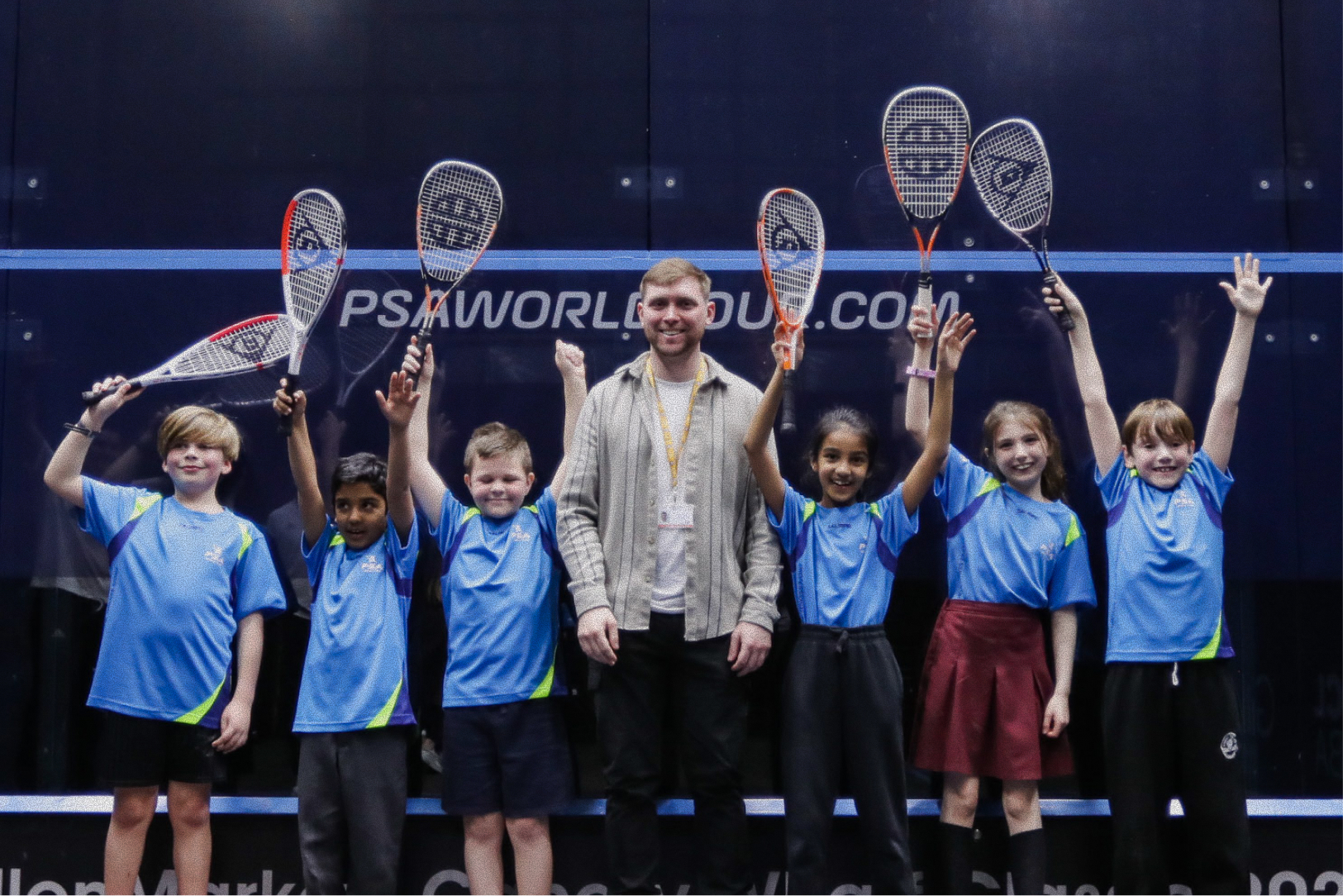
If I ever write a book, it will be called The Best Coaches Listen. Everything I have learned about leadership came from the kids I coached. Country clubs, corporate facilities, Harlem classrooms, Bridgeport gyms, they all taught me something different about what young people need.
There were kids I taught the game who said racially insensitive things. To me it came from ignorance, not cruelty. The conversation we had was uncomfortable, but his apology shifted our relationship. That moment taught me what accountability can do when handled with care.
There were the kids I sent home for not trying hard enough. Years later, they came to support the opening of my facility. That moment taught me that standards have a long memory. And there were Harlem teens whose aspirations I underestimated because I was afraid to let them fail. They surpassed every limitation. A lesson that taught me that protection is not always love. Sometimes belief is.
Give a child the right environment and they will become someone you did not see coming.
The truth about squash in America is straightforward. It is brilliant, it is demanding, it is beautiful, and it is expensive. Too expensive for the communities that would bring the most hunger and energy into it. The cost has shaped who gets to participate, who gets to advance, and who gets to dream inside the sport.
We have still never had a Black senior national team player. That is not about ability, but more about access. SquashBridge exists to help change that. The environment we are building is one where excellence is normal, and representation is plentiful. A place where Black and Brown kids walk into a room designed not only for their participation but for their elevation.
We are not here to make squash look different. We are here to make squash be different.
This program is the dream job I did not know I was preparing for. It allows me to build the bridge I once needed.
With squash entering the 2028 Olympics, a new world of possibilities opens. I picture our fifth graders watching the sport they love on the biggest stage they will have ever seen. That moment could give them another reason to continue. I hope it becomes a spark.
At the same time, I am realistic. Squash has a narrow pipeline. The countries represented at the Olympics could number fewer than ten. If we want the sport to grow, we must expand who participates and who is seen.
If we want squash to grow, we need the world in it, not the same world repeated.
Brisbane will matter just as much as Los Angeles. True growth will take decades. But this is a beginning, not a finish.
People often ask me to define community, because of my role. For me, it means allowing the younger generation to enter your space and feel safe enough to be themselves. It means creating an atmosphere where adults do not move with ego or hidden goals.
Community is when nothing has a dollar sign attached to it.
A real community feels like a gathering where people give without expecting anything in return. Someone hands you food without asking for payment. Someone offers you water before you realize you are thirsty. Someone helps you wash your hands and thanks you for being there. And you thank them back. That reciprocity is the heart of community.
That is the type of space I want SquashBridge to become. A space where young people from underserved neighborhoods, doctors, lawyers, business leaders, and families can all exist in one place. A space everyone can afford. A space where everyone is welcomed without hesitation.
If I could speak to my six-year-old self holding a racket that was almost bigger than him, I would tell him to get ready. I would tell him the journey will be wild and beautiful. I would remind him to enjoy every moment and not to take anything for granted. I would tell him he is lucky he does not have a phone.
Today, I carry all of my lessons into my work. I lead with presence and intention. I try to offer every child the same feeling I had on that court in Harare. Safety, belonging, and Possibility.
These are the gifts that shaped my life. These are the gifts I try to pass on.
My story is proof that sometimes the smallest court can open the widest world.
Sometimes the smallest court opens the widest world.