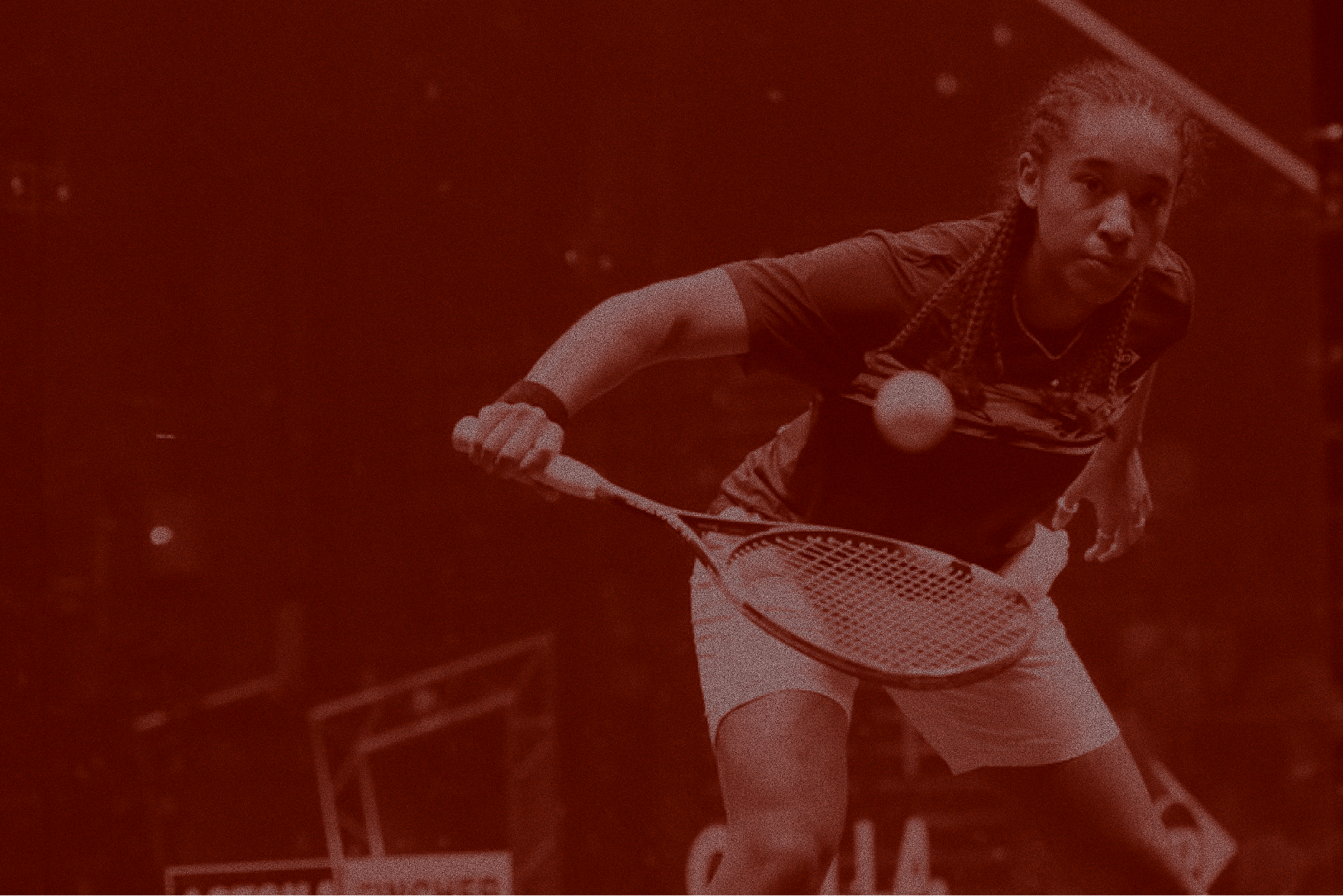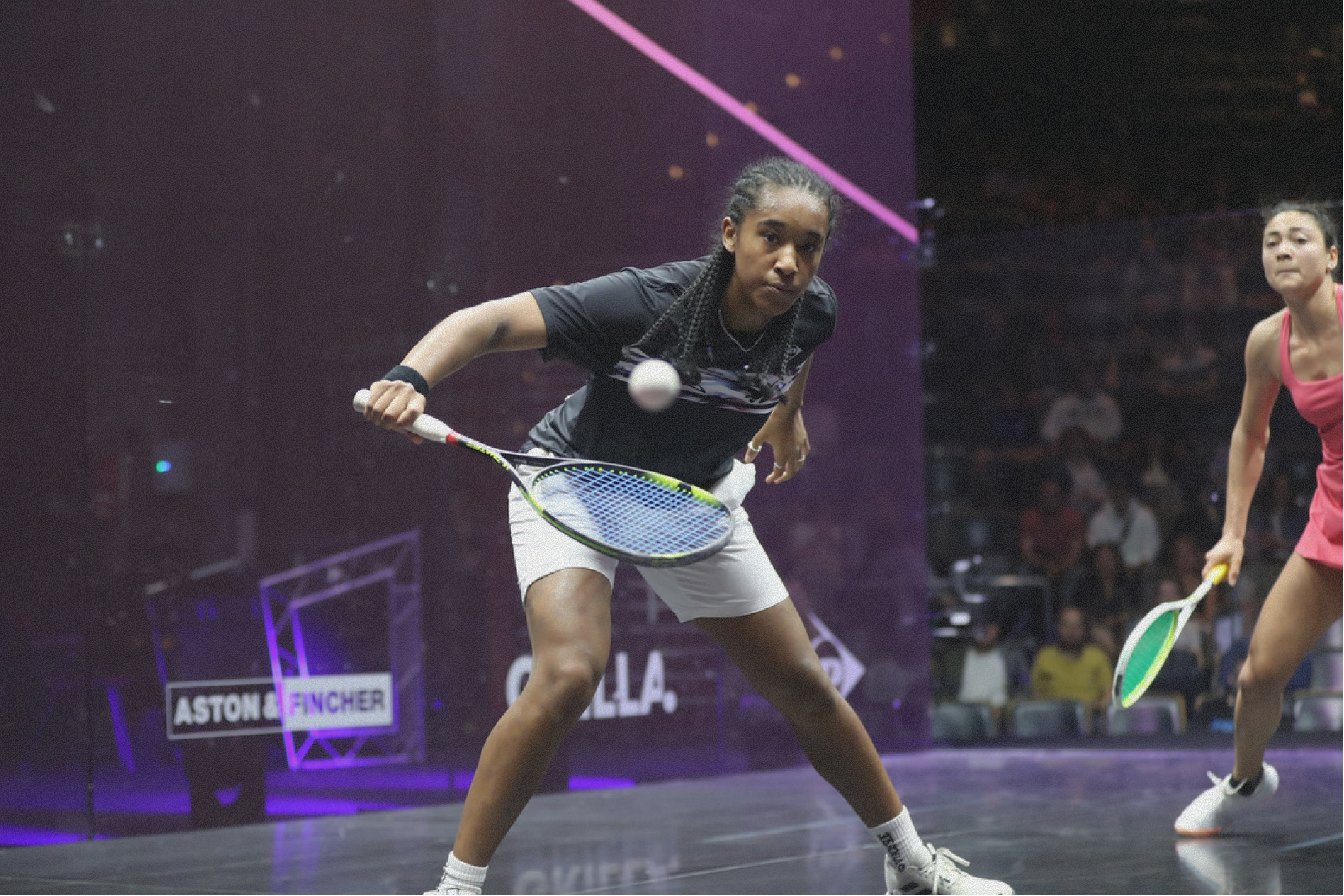
I found squash by accident, which still makes me laugh when I think about it. Football was my first love. That was the sport I cared about first, the one that felt natural.
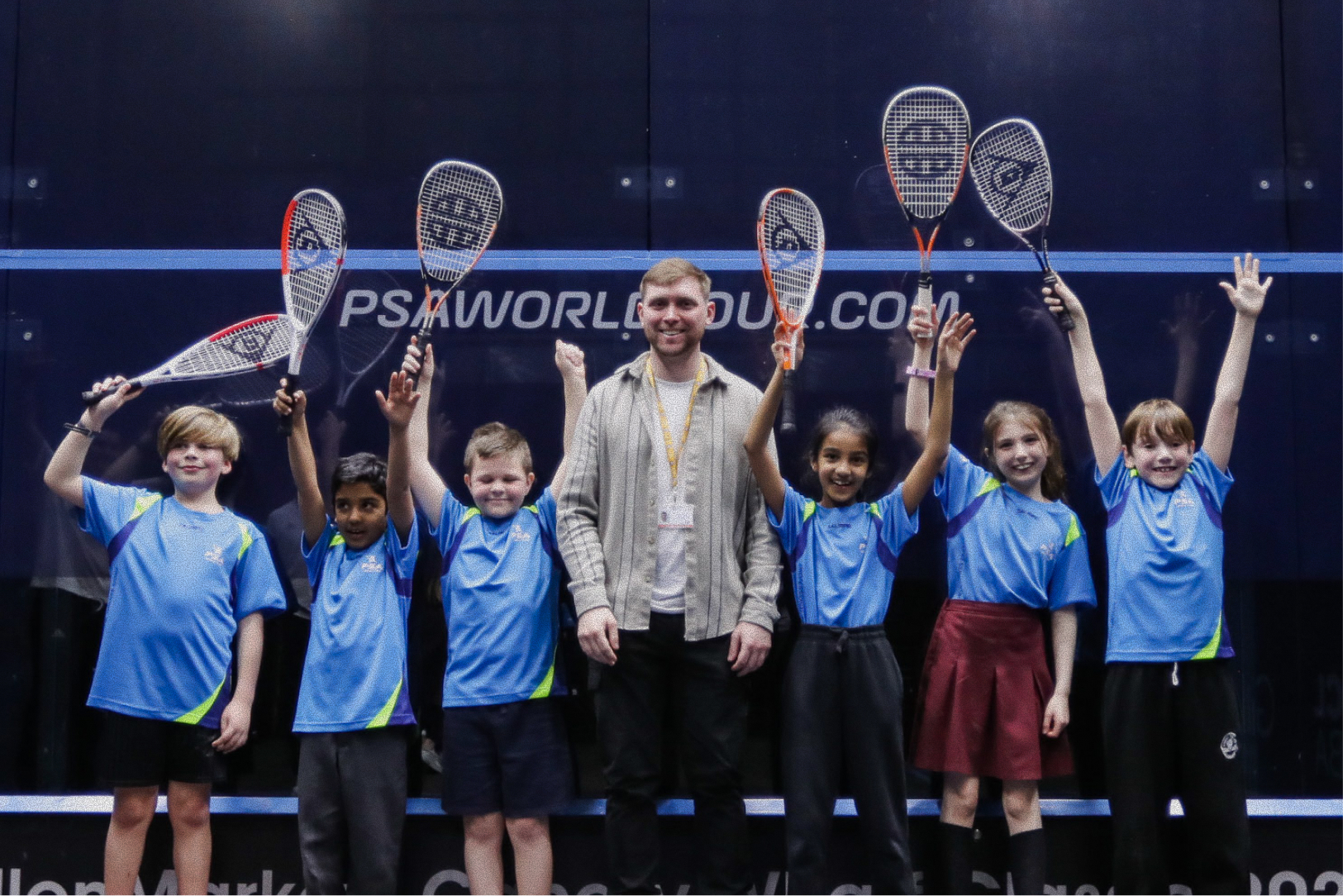
Then when I was around ten, I was doing a fun run around Manchester City’s stadium, and the England National Squash Centre was there. The courts were open, my brother and I went in, and we were just messing around. One of the coaches told my mum, “You should bring them down to practice.” And that was really it. My life changed because someone noticed two kids having fun.
What I remember most from those early years is not pressure. It is joy! Summers at camp, team league matches. Hours spent at the club in Manchester. The kind of memories that stay with you because they are tied to a place that helped raise you. Even now, I still get to go back there because the PSA event at the National Squash Centre brings me home. And sometimes that same coach is still around, which feels special. It reminds me that beginnings matter. They stay with you.
“My life changed because someone noticed two kids having fun.”
Moving from Manchester to Harvard was a very different kind of beginning. It was exciting, but also scary. I was shy growing up, and at eighteen I moved across the world on my own. No one from my school was coming with me. I was the only English player in my year on the squash team. It was cold, unfamiliar, and bigger than anything I had known. Even when you choose that kind of leap, it still asks a lot of you.
But Harvard gave me something I did not fully understand I needed. It gave me a team. Squash is such an individual sport. You step on court alone, and it is your match, your decisions, your responsibility. Yet being part of a team changed the way I think about everything. It showed me that even in an individual sport, you do not really do anything alone.
You need people around you who want the same things, who show up every day, who share the hard parts and the good parts with you. You need people who understand what a loss feels like and who can celebrate a win without making it about themselves. That built-in family has meant a lot to me. It still does.
There is also the practical side of that support. Coaches. Physios. Nutrition. Mental health resources. All the things that help an athlete not just perform, but hold themselves together over time. I know how lucky I have been to experience that. And as I get closer to graduating, I think I feel even more clearly how rare that ecosystem is.
“Even in an individual sport, you do not really do anything alone.”
People might assume that reaching the top 40 comes with some clean moment of arrival. A moment where you think, yes, I belong here now. But I do not think it has felt that way for me. Not yet. I have had good wins, and I know I have earned my position, but I still feel like there is more in me. More to do. More to prove to myself. Sometimes your ranking moves and you barely have time to sit with it because you are going straight from training into class, or thinking about an assignment due the next day. Life does not pause to let you admire your own progress.
Maybe that is why losses can sting so much. Especially the ones where you are seeded to win. Those are hard in a particular way. You lose, and then you are stuck sitting in a different city for a day or two, replaying it all in your head. Thinking about the round you could have reached. Thinking about the match you feel you should have won. In those moments, it is easy for everything to feel heavy. But I have learned to be methodical.
I try to step back, look at what actually went wrong, and focus on what can improve. Not everything is broken. Sometimes it is a few details, a few decisions, a few moments. That helps. So does remembering that however important squash is to me, it is still one match. My friends still love me. Life still moves. I still have to turn in the assignment. That perspective keeps me grounded.
There is another layer to all of this, of course, and that is what it means to move through squash as a person of color. I grew up with an Asian mum, so in some ways I got used to standing in spaces where people looked twice, or asked questions they probably did not need to ask. That feeling of being looked at, or quietly measured, is not new to me. But there are environments in squash that sharpen it.
In America, so many tournaments happen in country clubs, and those spaces can feel very far from my life and where I come from. They are often dominated by old white men. I come from a low-income family. So walking into those places, you feel the distance. You feel what is assumed to belong there, and what is not.
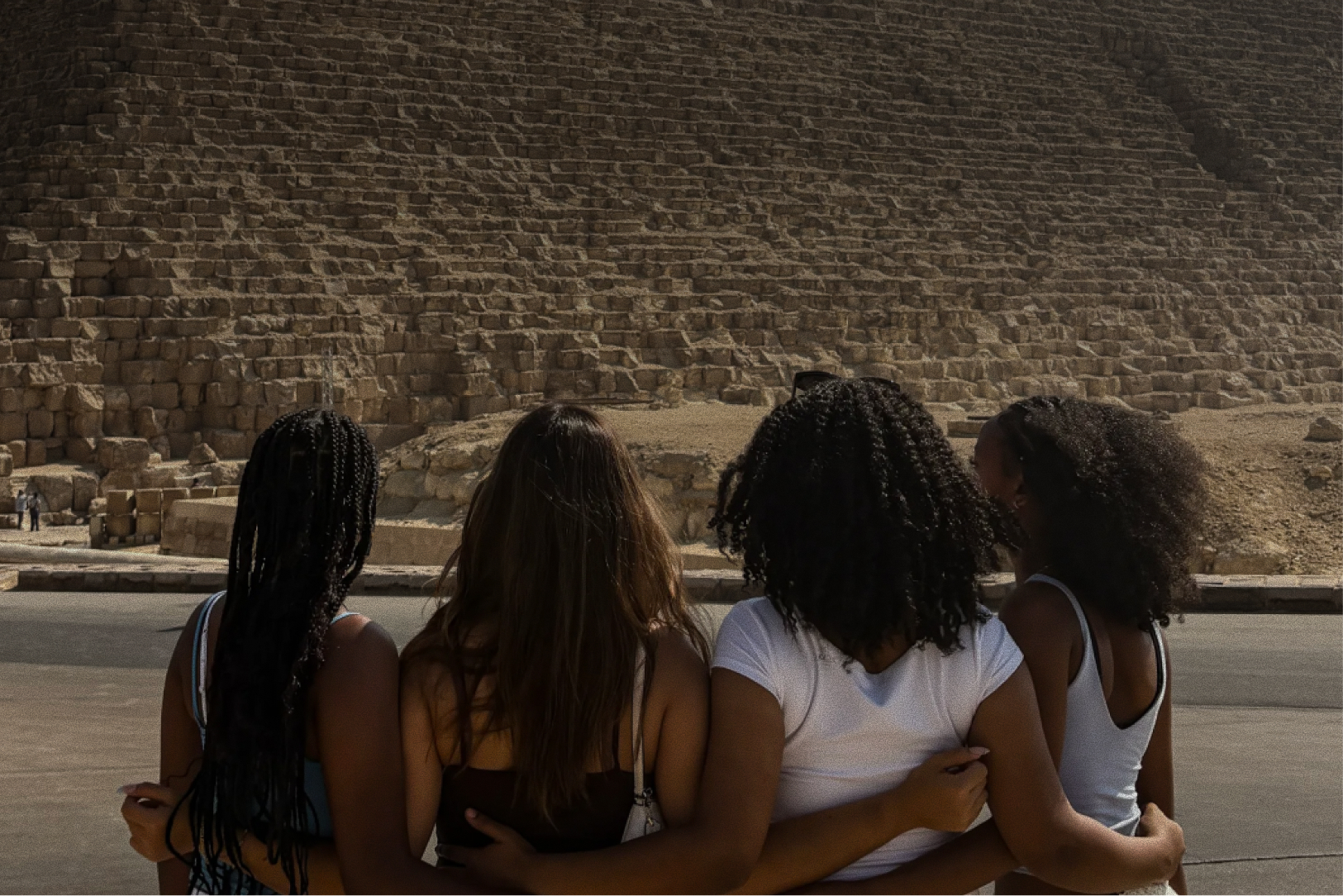
What I have learned is that sometimes the clearest answer is to let your squash speak. Once you win rounds, once you compete, once you make your presence undeniable, people have to adjust their assumptions. And the truth is, the professional tour has also shown me a broader version of the sport. A more diverse one. That matters to me. Egypt, an African country, has led the sport at the highest level. That matters too. It says something powerful about who excellence belongs to.
“Sometimes the clearest answer is to let your squash speak.”
When I think about what squash needs next, I keep coming back to access. That is the heart of it for me. The sport is too expensive, too hidden, too often passed down through families already inside it. I was lucky to find it by accident. Most people do not. You need a racquet, shoes, court time, a way in. Compare that to football, where you can understand the game almost anywhere, with almost nothing, and the difference becomes obvious.
If squash wants to become more inclusive, more competitive, more alive, it has to become easier to reach. Not just easier to admire from a distance, but easier to try. Easier to enter. Easier to believe you belong in.
The Olympics will help with visibility. I believe that. More people will hear the word squash. More people might watch it and get curious. That can only be a good thing. At the same time, I think we also have to be honest about the limitations, especially with such a small draw. There are world-class players who will miss out. That is difficult. But even with that frustration, there is still something meaningful about the sport stepping onto a bigger stage. Visibility matters. Representation matters. Possibility matters.
If I had to strip everything back and say one thing to my younger self, it would be simple. Don’t be scared. Do not be scared to take up space. Do not be scared to assert yourself. Do not be scared to be in the rooms, cities, schools, clubs, and competitions you want to be in. Too many people spend energy wondering if they are allowed to belong. I know that feeling. I have lived it. But I also know that living outside the norm can teach you something. It can make you more comfortable in yourself.
That shows up in small ways too. I wear shorts and a T-shirt on court when a lot of women are expected to wear something else. That might sound minor to some people, but it is still part of the same instinct. I want to feel like myself. I want to compete as myself. I do not want to shrink into someone else’s version of what I should look like in order to be accepted. Over time, I think that choice has become part of a bigger understanding. You do not always have to fit the shape already laid out for you. Sometimes you play better, live better, and feel stronger when you stop trying to.
“Do not be scared to take up space.”
Maybe that is the thread running through everything for me. From a kid in Manchester who stumbled into squash by chance, to a student-athlete crossing the Atlantic alone, to a professional still chasing more from herself. The journey has not been about becoming fearless. It has been about moving anyway. Growing anyway. Believing anyway.
And maybe that is what makes sport powerful in the first place. Not that it gives you a perfect path, but that it keeps revealing who you are when the path gets difficult.
For me, squash has done that again and again. It has challenged me, unsettled me, carried me, and sharpened me. It has taken me into rooms where I felt out of place and taught me how to stay there with conviction. It has given me people, perspective, ambition, and a deeper relationship with myself.
So no, I do not think I have had the final moment yet where I look around and say, I have arrived.
I think I am still on my way.
And that feels honest. And it also feels like the point.